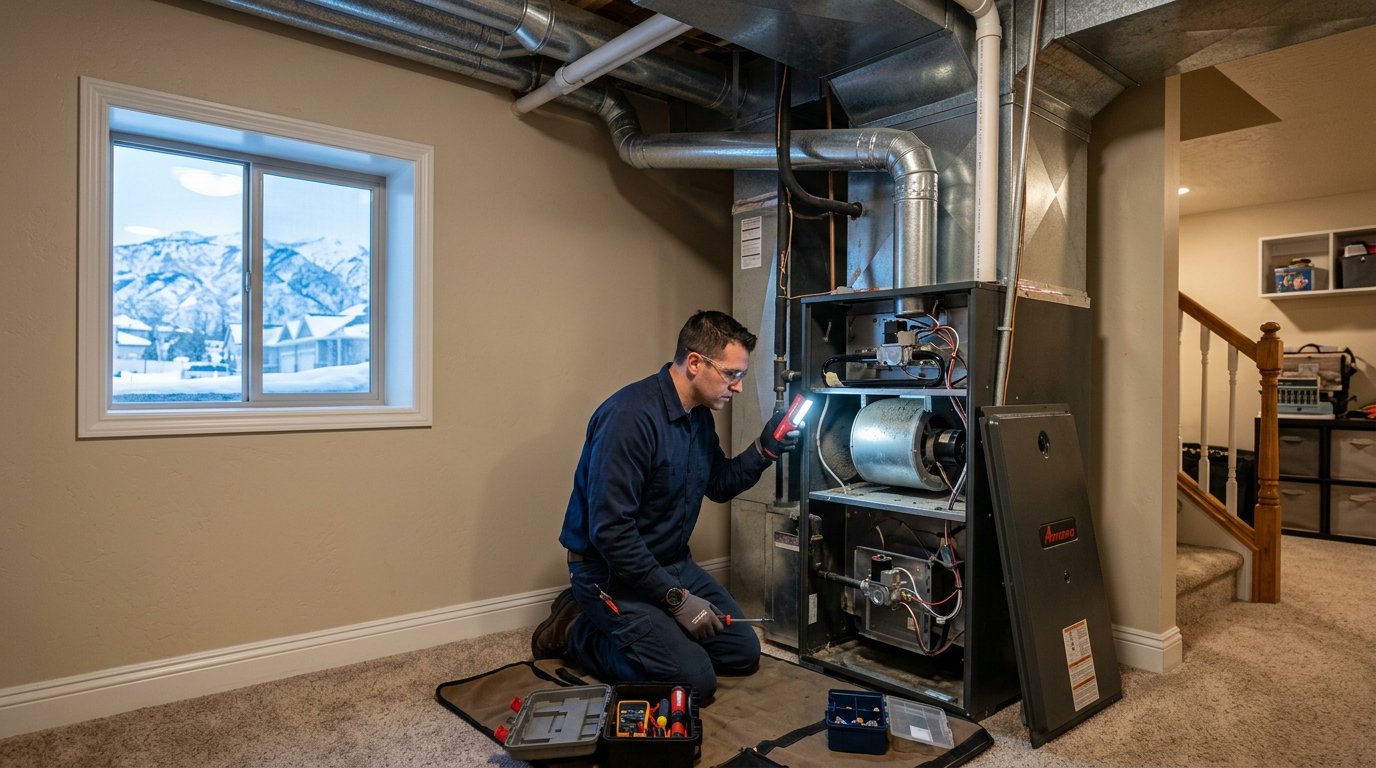
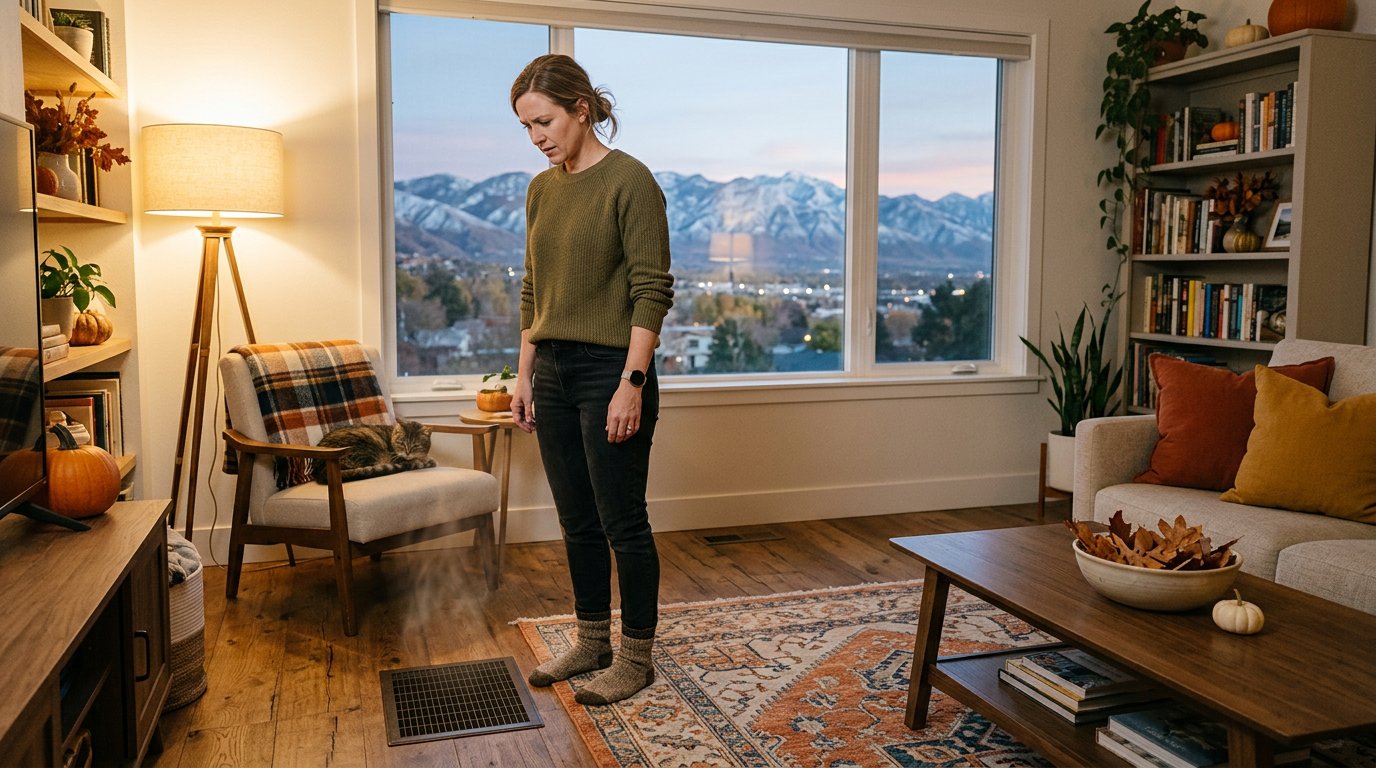
The first cold snap of fall along the Wasatch Front always brings the same phone calls. Someone in Sugar House or Murray nudges the thermostat up for the first time since April, the vents kick on, and a few minutes later the whole house smells like something is cooking that shouldn’t be. Most of the time, a furnace burning smell on that first run is harmless. Sometimes it isn’t. If you’d rather have a pro take a look, our furnace repair service covers Salt Lake City, Murray, Sandy and the rest of the valley. Here’s how to tell what you’re dealing with.
Why Your Furnace Smells Like Burning After Summer
From May through September, your furnace sits idle. Dust settles on the burners, the heat exchanger and the inside of the cabinet. Salt Lake summers are dry and gusty, and between construction dust, dust blowing in off the Great Salt Lake shoreline and the odd week of wildfire smoke, a fine layer builds up fast.
When the burners light for the first time, that dust heats up and burns off. The result is a dry, slightly toasty odor that drifts through the vents. It’s a normal furnace burning smell, and it usually:
- Shows up within the first few minutes of the first heating cycle
- Smells like dust on a hot light bulb or a space heater
- Fades after an hour or two of run time
- Doesn’t come back once the system has burned clean
If that matches what you’re noticing, crack a couple of windows, let the furnace run, and give it some time.
Dirty Filters Make the Smell Worse
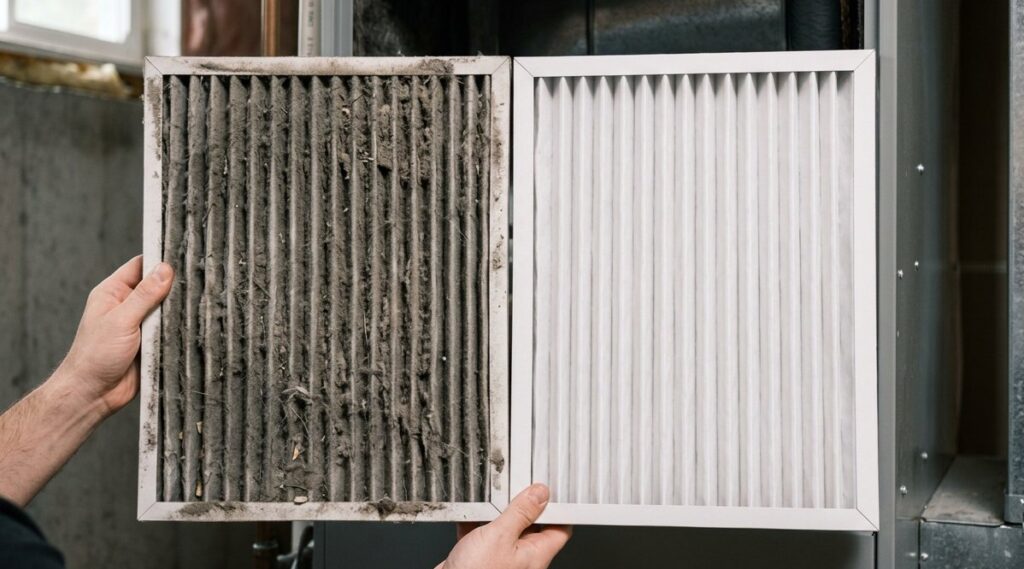
A clogged filter is the most common reason a furnace burning smell hangs around longer than it should. Utah’s dry, dusty months load filters faster than most homeowners expect, and a filter that looked fine in June can be gray and packed by October.
When airflow drops, the furnace runs hotter. Dust trapped in the filter and blower keeps producing a burnt odor every time the system cycles. In bad cases, the high limit switch starts shutting the burners off to protect the heat exchanger, and you end up with a cold house on top of the smell.
Here’s a quick filter check before you call anyone:
- Pull the filter and hold it up to a light. If you can’t see light through it, replace it.
- Match the size printed on the frame, and point the airflow arrow toward the furnace.
- Plan to swap 1 inch filters every one to three months during heating season.
- Vacuum around the filter slot and return grille while you’re there.
We cover more of these easy jobs in our furnace maintenance tips for Salt Lake City homeowners.
Normal Smells vs. Warning Signs
Not every furnace burning smell is dust. Here’s how to read what your nose is telling you.
Dusty or Toasty Smell
Normal, especially early in the season. It should clear within a few hours of run time. If it lingers for days, check the filter and look for anything stored too close to the unit, like boxes, laundry or bins of holiday decorations.
Electrical or Burning Plastic Smell
This one is not normal. A sharp, acrid smell like hot wiring or melting plastic often points to an overheating blower motor, a failing capacitor or damaged wiring inside the cabinet. Turn the system off at the thermostat, then flip the furnace power switch, which usually looks like a light switch on or near the unit. Don’t keep restarting it to see if the smell comes back. Overheated electrical parts can start a fire.
Rotten Egg or Sulfur Smell
Natural gas has no smell on its own, so the utility adds a sulfur compound called mercaptan to make leaks obvious. If you smell rotten eggs near the furnace, water heater or gas meter:
- Don’t flip light switches, touch the thermostat or start a car in the garage.
- Get everyone, pets included, out of the house.
- Call your gas utility’s emergency line or 911 once you’re outside.
- Wait for the utility to clear the home before scheduling any furnace repairs.
Musty or Oily Smell
A musty odor can mean moisture in the ductwork or a dirty evaporator coil sitting on top of the furnace. An oily smell sometimes comes from a new motor or a recent repair burning off protective coatings. Both are worth mentioning to a technician, but they’re rarely emergencies.
Check Your Carbon Monoxide Detectors
Here’s the part that surprises people. Carbon monoxide has no smell at all. A furnace with a cracked heat exchanger or a blocked flue can push CO into your home without a single strange odor, so your nose is never the safety check.
Every fall, when the heat comes on, take five minutes to:
- Press the test button on each CO detector.
- Replace the batteries, or the whole unit if it’s past the date printed on the back. Most last five to seven years.
- Make sure there’s a detector on every level and near each sleeping area.
- Clear snow and leaves away from the furnace exhaust and intake pipes outside.
The Utah Poison Control Center warns that CO exposures climb as temperatures drop and recommends yearly service on gas appliances. If your detector goes off, or anyone at home feels dizzy, nauseous or headachy, get outside first and figure out the cause later.
When to Call a Technician
You can handle a dusty first run and a dirty filter on your own. Call a pro when:
- The furnace burning smell lasts more than a day, even with a clean filter
- You smell hot wiring, melting plastic or rubber
- New squealing or grinding shows up along with the smell
- The furnace shuts off repeatedly or starts blowing cool air
- Your CO detector has alarmed, even once
- The gas company has cleared your home and the furnace needs repairs
Our technicians handle furnace calls across Salt Lake City, Murray and Sandy all season long. We’ll trace the source, show you what we found and give you a straight answer on whether it needs a cleaning, a part or something bigger. South valley homeowners can learn more about our service in Sandy as well.
Get Your Furnace Checked Before Winter Hits
A brief furnace burning smell in October is part of living in Utah. A smell that hangs on, or one that smells electrical or like gas, is your furnace asking for help. If you’re not sure which one you have, make the call before the first real storm rolls in over the Oquirrhs.
Curious what your neighbors think of our work? You can read our Google reviews, then call us at 801 948 0663 to book a visit.
Frequently Asked Questions
Is it normal for a furnace to smell like burning when first turned on?
Yes. Dust that settled on the burners and heat exchanger over the summer burns off during the first few heating cycles. The smell should fade after an hour or two of run time.
How long should a furnace burning smell last?
A normal dust smell usually clears within a few hours and is gone by the next day. If it lasts longer, check the filter first. If it keeps going with a clean filter, schedule an inspection.
Can a furnace burning smell be dangerous?
It can be. A smell like hot wiring or melting plastic points to an electrical problem, and a rotten egg smell can mean a gas leak. Shut the system off and get help right away in either case.
What does a burning plastic smell from a furnace mean?
It usually means an electrical part is overheating, such as the blower motor, a capacitor or the wiring. Turn the furnace off at the power switch and call a licensed technician.
Can a dirty furnace filter cause a burning smell?
Yes. A clogged filter restricts airflow, makes the furnace run hotter and lets trapped dust keep burning off. Replacing the filter often clears the odor.
Does a furnace smell mean carbon monoxide?
No. Carbon monoxide has no smell, so you can’t detect it with your nose. Working CO detectors on every level of your home are the only reliable way to know.