
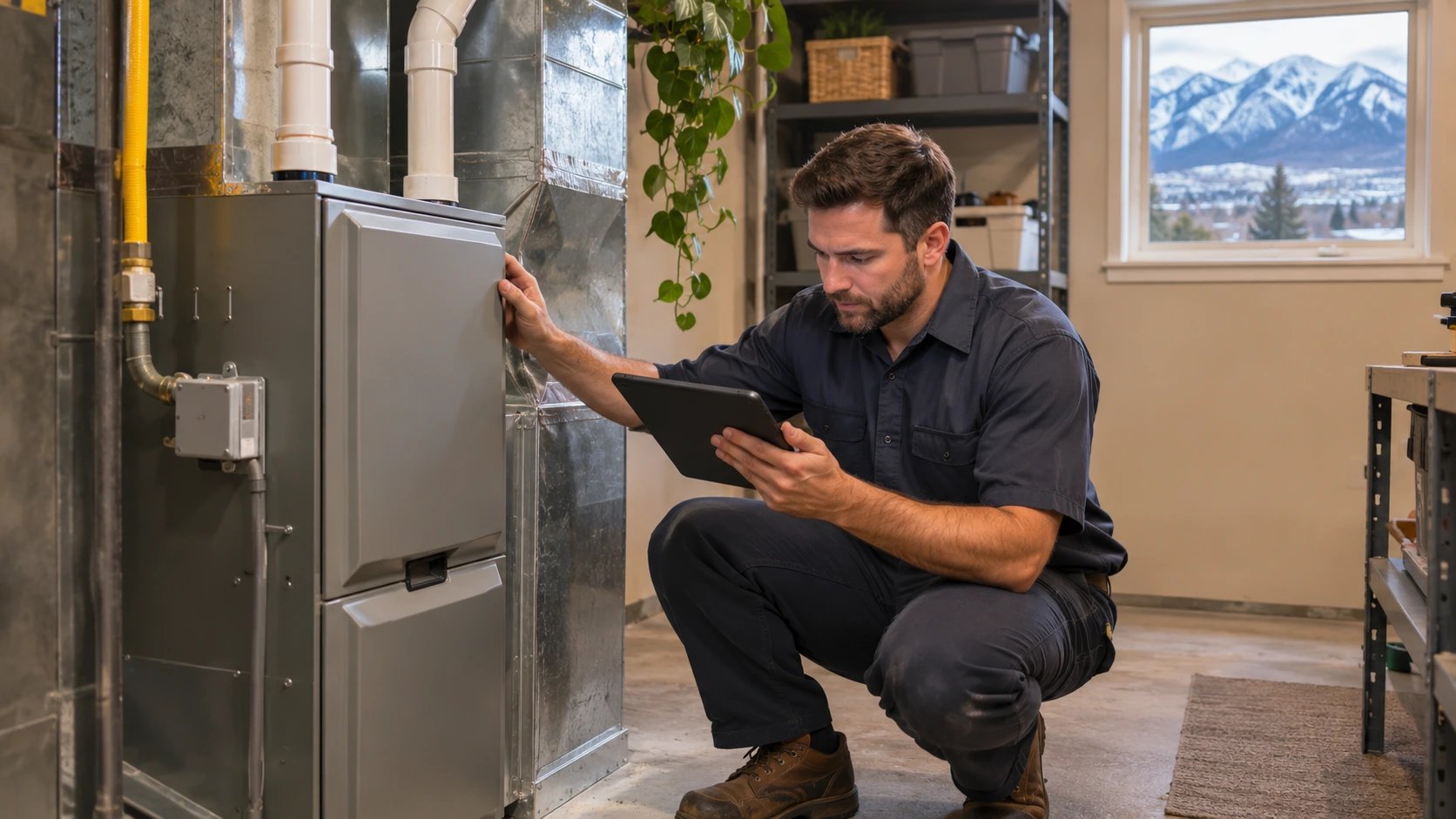
Picking a new heating system sounds simple until the quotes show up and two furnaces that look almost identical have very different prices. If you are planning furnace installation for your home along the Wasatch Front, the real question is how the burner behaves. That is exactly what separates a single-stage vs two-stage furnace, and it affects your comfort, your noise levels and your monthly gas bill for the next fifteen years or more.
Below we break down how each type works and when the extra upfront cost pays you back.
How a Single-Stage Furnace Works
A single-stage furnace has one setting: full blast. When your thermostat calls for heat, the burner fires at 100 percent capacity and the blower pushes hot air through the ducts until the house reaches the target temperature. Then everything shuts off completely until the temperature drops again.
That simple design has real advantages:
- Lower purchase price and a straightforward installation
- Fewer moving parts, which usually means simpler repairs
- Plenty of heat for the coldest nights of the year
The downside is how it behaves on a normal day. Utah winter days are rarely at the extreme. Many mornings start near zero and finish in the 40s with bright sunshine. A furnace built for the worst night of January still has to run on a mild afternoon, so it blasts hot air, overshoots, shuts off and repeats the cycle. You notice it as warm and cool swings from room to room.
How a Two-Stage Furnace Works
A two-stage furnace has a low setting and a high setting. The low stage usually runs at roughly 60 to 70 percent of full capacity, and the high stage kicks in only when the house really needs it. According to the Department of Energy, furnaces with multiple stages or variable output can match the heat to the demand instead of cycling hard on and off.
In practice, a two-stage unit spends most of the winter on low, which is smoother and quieter than constant full blast starts.
Here is what homeowners usually notice after switching:
- Longer, gentler run cycles with fewer sudden starts
- More even temperatures from floor to floor
- A quieter system, since the blower runs slower on the low stage
Single-Stage vs Two-Stage Furnace Comfort in Two-Story Salt Lake Homes
Two-story houses are where this difference shows up the most. Heat rises, so the upstairs bedrooms tend to run warm while the main floor and basement stay cool. A single-stage furnace pumps in a big burst of heat, and the second floor gets most of it before the thermostat downstairs is satisfied.
A two-stage furnace keeps the air moving at a gentle rate, which blends the layers of air in the house instead of stacking them. Families in Salt Lake City, Sandy and Draper with finished basements often tell us this is the change they feel first. The master bedroom stops feeling like a sauna at midnight, and the kids’ rooms on the far end of the hall finally stay comfortable.
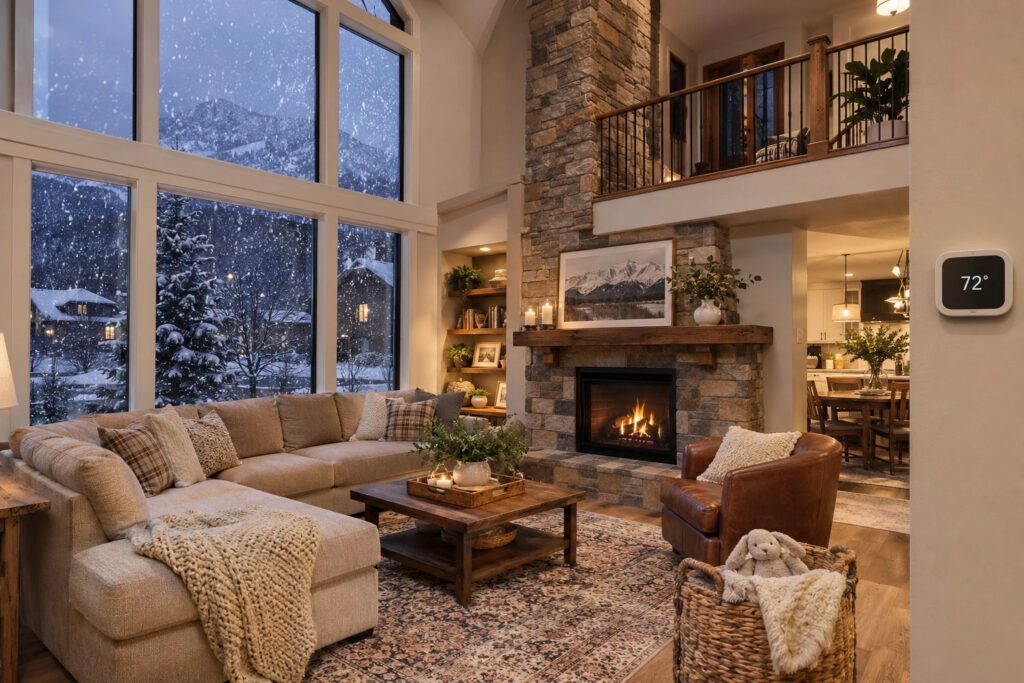
Cold Wasatch Front Nights vs Mild Sunny Afternoons
Utah gives your furnace two very different jobs in the same day. Overnight, temperatures can drop hard, especially during an inversion or a cold snap. By two in the afternoon, the sun through your south facing windows can do half the work for you.
- On a cold night, a two-stage furnace moves to its high stage and delivers full power, just like a single-stage unit.
- On a mild sunny afternoon, it stays on low and quietly tops up the heat.
- A single-stage furnace uses the same full power at both times, so it wastes more energy during the easy hours.
Since most of the winter hours in northern Utah are closer to the second scenario than the first, a two-stage system spends most of its life in the mode that uses less gas.
Upfront Cost vs Enbridge Gas Savings
The single-stage vs two-stage furnace price gap is real, because a two-stage furnace costs more to buy. The gap depends on the brand, the efficiency rating and the install, but it is commonly somewhere between a few hundred and a couple thousand dollars. That is a fair amount of money, so it is worth asking what you get back.
The savings come from how the unit runs. Longer, lower cycles waste less heat at startup and shutdown, and a better matched output keeps the house closer to your set temperature. With Enbridge Gas rates shifting from year to year, even a modest reduction in therms adds up over a long winter. The ENERGY STAR furnace guidance is a good place to compare efficiency ratings, and our team can walk you through the numbers for your specific square footage and insulation.
A rough rule of thumb we share with customers:
- Staying in the home ten years or more: two-stage usually earns back the difference
- Large or two-story home with uneven rooms: two-stage is worth it for comfort alone
- Small, well insulated home or a short ownership window: single-stage can be the smarter buy
Noise, Airflow and Day to Day Feel
When people compare a single-stage vs two-stage furnace, noise is the part they underestimate. A single-stage furnace starts loud and finishes loud. Some homeowners do not notice, but light sleepers and anyone with a bedroom above the furnace closet usually do. A two-stage system ramps up more gently and runs on low most of the time, which makes the whole house feel calmer.
The blower matters too. Many two-stage furnaces pair with variable speed blowers that adjust airflow along with the burner. That means fewer cold drafts when the system starts, steadier humidity and better filtering. If you also want to compare heating technologies before you commit, our guide on heat pump options explains when a heat pump makes sense in Utah and when a furnace still wins.
When a Single-Stage Furnace Still Makes Sense
In a single-stage vs two-stage furnace decision, the simpler unit is not a bad choice. It is the right call in several situations:
- You are on a tight budget and need reliable heat this winter
- You are replacing a furnace in a rental property or a home you plan to sell soon
- Your house is small, open and easy to heat evenly
- You rarely run the heat for long stretches
A properly sized, well installed single-stage furnace will keep a home warm. The difference is in how refined that warmth feels, not whether it works.
Sizing and Installation Matter More Than the Label
Whichever side of the single-stage vs two-stage furnace debate you land on, a badly sized furnace will disappoint you. An oversized unit short cycles, wastes gas and wears out faster. An undersized unit struggles on the coldest nights. Ducts matter too, since leaky or undersized ductwork can erase the benefits of a premium furnace.
A good installer should measure your home, check the ducts and talk about your comfort goals before quoting a model. Regular tune ups also protect your investment, and our furnace maintenance visits catch small problems before the first hard freeze. If you have questions about what we install across Salt Lake and Utah County, take a look at our customer reviews on Google to see what neighbors say about the work.
Frequently Asked Questions
What is the main difference in a single-stage vs two-stage furnace?
A single-stage furnace always fires at full power, while a two-stage furnace has a low setting for mild weather and a high setting for the coldest nights. That means steadier heat and quieter operation.
Is a two-stage furnace worth it in Utah?
For most families in two-story or larger homes, yes. The long, low cycles fit our mild afternoons and cold nights well, and you get steadier temperatures and quieter operation along with some gas savings.
How much more does a two-stage furnace cost than a single-stage?
The difference is usually a few hundred dollars up to a couple thousand, depending on the brand, efficiency rating and installation needs. A free in home quote is the quickest way to see the real number for your house.
Will a two-stage furnace lower my gas bill?
Often it will, because it runs on low most of the time and wastes less heat starting and stopping. The size of the savings depends on your home, your thermostat habits and Enbridge Gas rates.
Is a two-stage furnace quieter?
Yes. It starts gently and spends most of its time on the low setting, so you hear far less of the loud startup common with a single-stage unit.
Can I replace a single-stage furnace with a two-stage unit?
In most homes, yes. Your installer may need to check the venting, the thermostat and the ductwork to make sure everything matches the new equipment.
