Every July, the same thing happens. The mail brings a power bill that is noticeably higher than the month before, and the first question most homeowners ask is simple: why your AC bill spikes so hard once summer hits. If you live anywhere in the Salt Lake Valley, you already know the answer starts with the weather, but it rarely ends there.
Triple digit days are common here, and running an air conditioner through that kind of heat is expensive by nature. Still, in plenty of homes the AC bill spikes far more than a neighbor’s system running the exact same hours. When that happens, the cause is usually something specific inside the system, not just the thermometer outside.
Triple Digit Heat Means Your System Never Really Stops
When outdoor temperatures push past 100 degrees, your air conditioner is fighting a much bigger gap between indoor and outdoor temperature than it does in the spring or fall. That gap is exactly what drives energy use. The wider it gets, the longer the system runs to hold your thermostat setting, and the more electricity it pulls to do it.
This is part of why an AC bill spikes so predictably during the hottest stretch of a Utah summer. Utility pricing follows demand too, and the U.S. Energy Information Administration tracks how residential electricity use and prices climb across the country during peak summer months as more households run cooling equipment at the same time. It is a pattern utility providers plan around every year, and it is one reason your bill can jump even if nothing about your home or habits has changed.
Dusty Outdoor Units Are Working Harder Than They Should
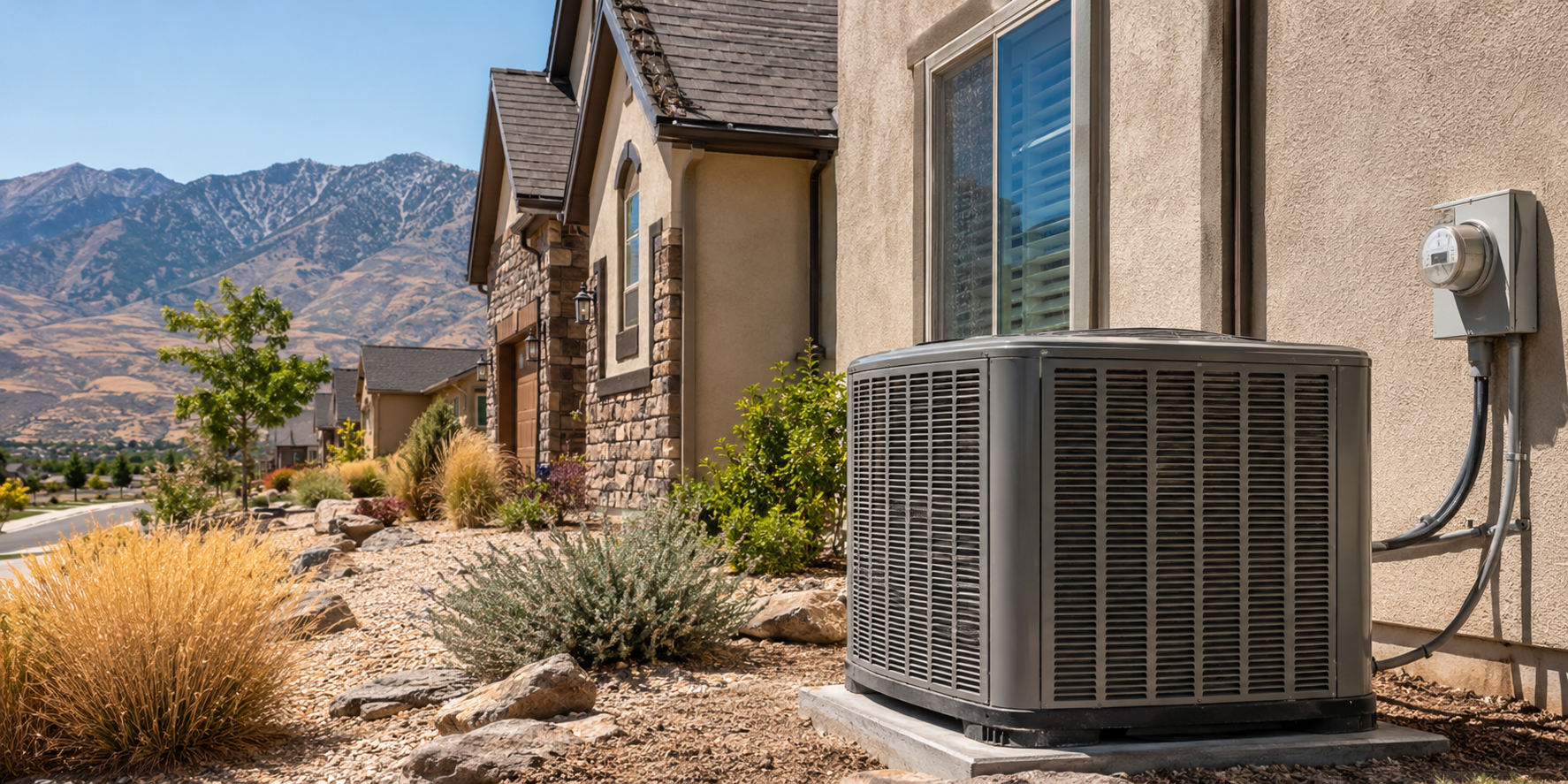
Salt Lake Valley summers bring dust along with the heat, and that dust settles directly on the outdoor condenser coil. A coil coated in dirt and debris cannot release heat the way it is designed to, so the system has to run longer to move the same amount of heat out of your home.
This is one of the quieter reasons an AC bill spikes without any obvious sign of trouble indoors. The house still cools down eventually, so many homeowners never suspect the outdoor unit at all. If you want to see how much of a role local dust plays in this exact problem, our breakdown of how heat and dust wear down equipment goes into more detail on what happens inside the unit over a full summer.
Clogged Filters Quietly Drive Up Your Bill
A dirty air filter restricts airflow before the air ever reaches your evaporator coil. The system compensates by running longer to push enough air through, which uses more electricity for the same amount of cooling. It is one of the simplest problems to fix and one of the most common reasons an AC bill spikes month after month without an obvious explanation.
According to guidance in the ENERGY STAR heating and cooling maintenance checklist, airflow problems from a neglected system can reduce efficiency by up to 15 percent, and a dirty filter is one of the fastest ways to create that kind of airflow restriction. Checking and replacing filters monthly during peak cooling season is one of the easiest habits that actually shows up on your utility bill.
Leaky Ducts Send Cooled Air, and Money, Nowhere
Ductwork that runs through an attic or crawl space is exposed to extreme temperatures for most of the day. Gaps, disconnected joints, and worn seals let cooled air escape before it ever reaches your living space, so the system has to produce more cold air just to make up for what is lost along the way.
Homeowners often notice uneven cooling long before they notice the bill, but the two problems usually share the same root cause. Regular seasonal maintenance visits are one of the more reliable ways to catch duct leaks early, since a technician can spot pressure imbalances and airflow loss that are difficult to notice on your own.
Older Systems Running Continuously
Air conditioners lose efficiency as they age, even with decent care. A unit that is ten, fifteen, or twenty years old was simply not built to the same efficiency standards as equipment sold today, and worn components make it work harder to produce the same result. During a long stretch of triple digit days, an older system may run almost continuously just to keep pace, and that continuous runtime is exactly why an AC bill spikes hardest in homes with aging equipment.
The ENERGY STAR program’s own guidance on when to consider replacing older equipment points to age past ten years, frequent repairs, and climbing energy bills as the clearest signals that a system is no longer working efficiently, even if it still technically cools the house.
What Actually Brings the Bill Down?
An AC bill spikes for different reasons in different homes, so fixing a high summer bill rarely comes down to one single change. It usually means clearing dust from the outdoor unit, replacing filters on a regular schedule, sealing duct leaks, and being honest about whether an aging system is costing more to keep running than it would cost to replace.
For homeowners weighing that last option, our guide on ways to save with a new AC system walks through how a more efficient replacement can offset the upfront cost over a few summers of lower bills. For everyone else, a straightforward AC maintenance visit can usually identify the specific issue driving up your bill without guesswork.
Get Ahead of Next Month’s Bill
You do not have to wait for another surprise bill to figure out what is going on. Our technicians work throughout the Salt Lake Valley and can pinpoint exactly why your AC bill spikes the way it does, whether that means a dirty coil, a leaky duct run, or a system that has simply reached the end of its useful life. Reach out to our team and we will walk you through what we find and what it would take to fix it.
You can also see what other Salt Lake Valley homeowners have said about working with us on our customer reviews page before you decide who to call.
Frequently Asked Questions
Why does my AC bill spike every summer even though I set the same thermostat temperature?
The wider gap between indoor and outdoor temperatures during triple digit weather forces the system to run longer to hold that setting, which increases electricity use even without any change in your habits.
How much does a dirty air filter actually affect my electric bill?
A clogged filter restricts airflow and can reduce system efficiency significantly, which means longer runtimes and higher costs for the same level of cooling.
Can a dusty outdoor unit really make that much difference?
Yes. A coil covered in dust cannot release heat efficiently, so the compressor has to work harder and run longer to do the same job, which shows up directly on your bill.
Is it worth replacing an AC system just because the bill is high?
If the system is older than ten years, needs frequent repairs, and your bills keep climbing, replacement often ends up costing less over time than continuing to run an inefficient unit.
How can I tell if leaky ducts are behind my high bill?
Uneven temperatures between rooms, along with a system that runs constantly without properly cooling the house, are common signs that ducts are losing air before it reaches your rooms.
Does running the AC constantly during a heat wave damage the system?
Constant runtime itself will not necessarily damage a properly maintained system, but it does put more strain on an older or poorly maintained unit and will always increase your energy costs.
What is the fastest way to lower my AC bill this summer?
Start with a clean outdoor unit and a fresh filter, then have a technician check for duct leaks and confirm the system is running at the efficiency it should be for its age.