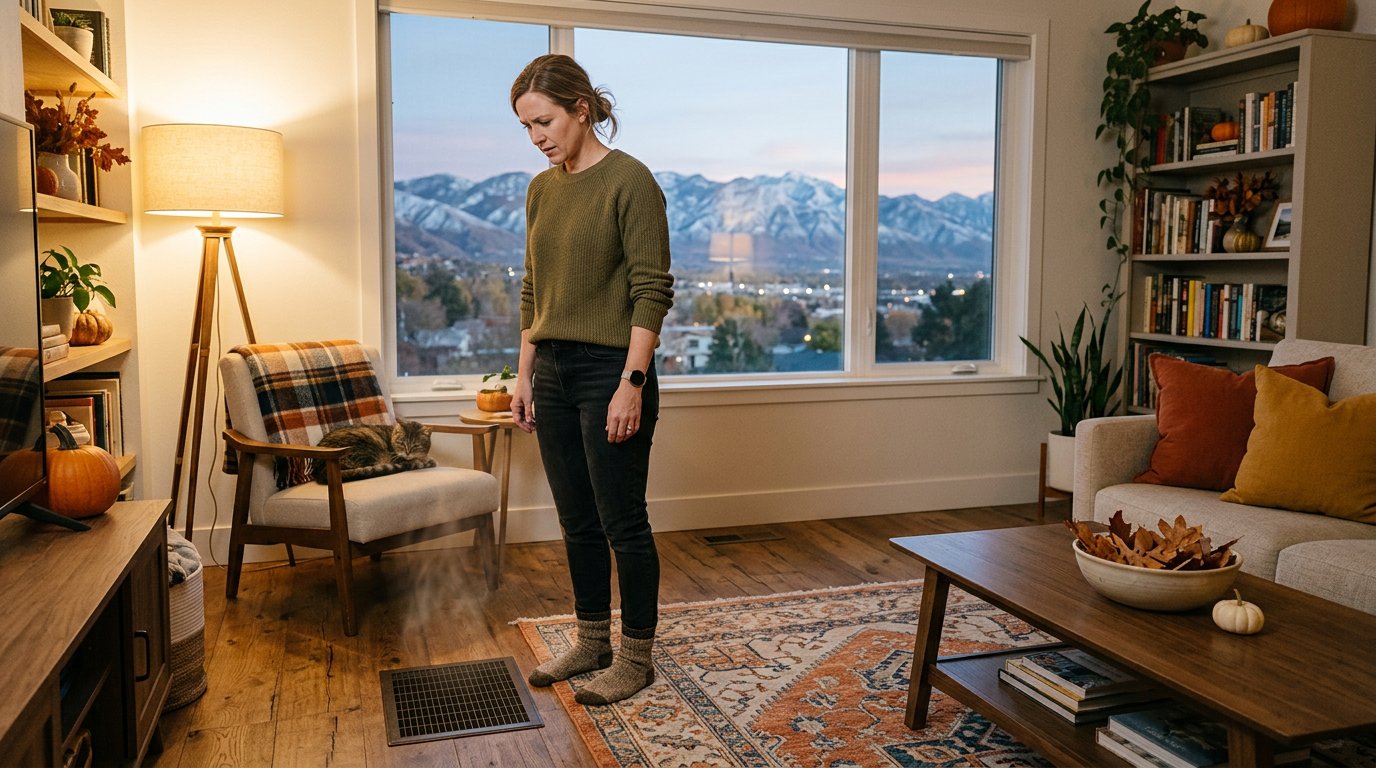
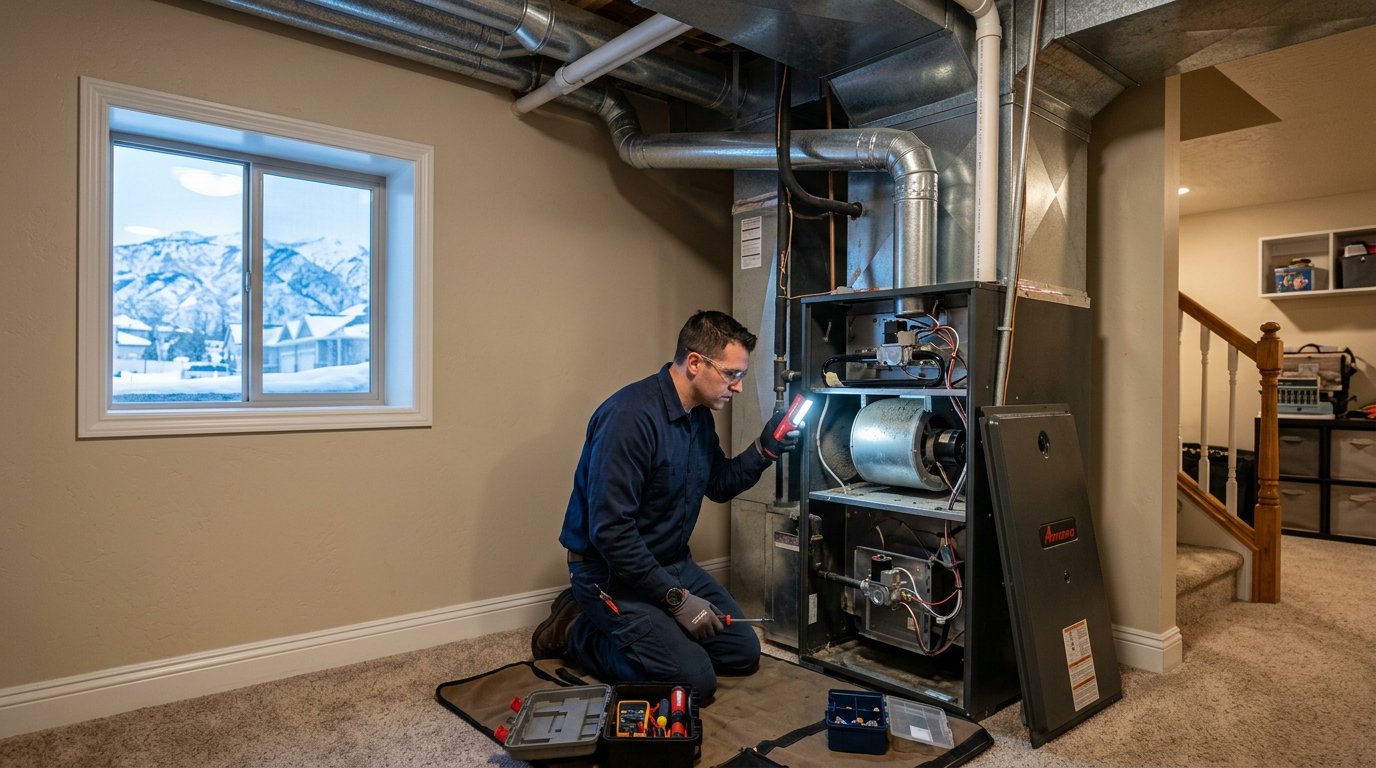
Utah County winters don’t ease furnaces in gently. One week it’s sweater weather on Center Street, the next it’s single digits overnight and the heat is running almost nonstop. That’s usually when homeowners start hearing it: a bang when the burners light, a squeal from the basement, a rattle that wasn’t there last spring. A furnace making noises is trying to tell you something, and our furnace repair team hears these sounds every week across Provo, Orem and Lehi. Here’s what each one usually means.
Why Furnaces Get Louder in Utah County
Cold snaps along the Wasatch Front push a furnace through long, back to back cycles. Every start heats and expands metal, every shutdown cools it again, and parts that were barely worn in October start showing their age by January. That’s why a furnace making noises in January often sounded perfectly fine at Thanksgiving.
Housing stock plays a part too. Many of the older homes in the neighborhoods around BYU and in central Orem still run furnaces with original blower motors, belts and sheet metal ductwork that’s been in place for decades. Bearings dry out, mounting screws loosen and duct seams separate. If you’re wondering whether your unit is near the end, our guide on how long furnaces last in Utah’s climate is a good place to start.
Banging or Booming
A loud bang right as the furnace kicks on is one of the most common calls we get. The usual cause is delayed ignition. Gas builds up for a second or two before it lights, then ignites all at once with a small boom. Dirty burners, a weak igniter or low gas pressure are typical culprits, and the boom tends to get louder as the problem gets worse.
Delayed ignition isn’t something to live with. Each small explosion stresses the heat exchanger, and over time that can lead to cracks. A cracked heat exchanger is a carbon monoxide risk, so a banging start deserves a prompt inspection.
A lighter popping or ticking sound as ducts heat and cool is different. That’s metal expanding and is usually harmless, especially in long runs of ductwork.
Squealing or Screeching
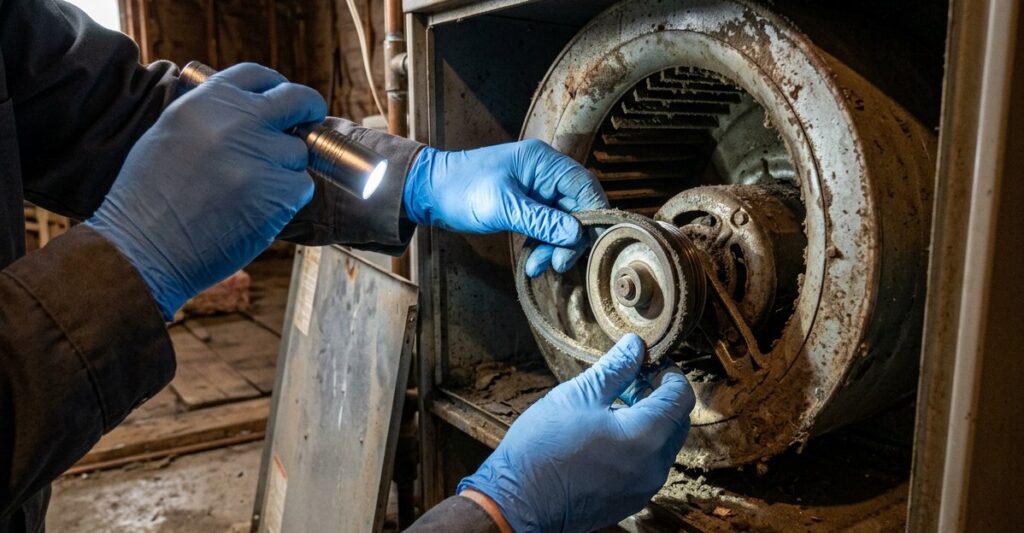
A high pitched squeal usually comes from the blower assembly. In older furnaces with belt driven blowers, a worn or loose belt is the classic cause. In newer direct drive units, the problem is more often a blower motor bearing that’s running dry.
ENERGY STAR’s maintenance checklist calls for lubricating moving parts and checking motor voltage and current during a fall tune up, and that’s exactly where squeals get caught early. Left alone, a dry bearing can seize and take the motor with it, which is a far bigger bill than a belt or a service call.
Rattling or Vibrating
When you catch your furnace making noises that sound like rattling, something is usually loose. Common sources include:
- A furnace access panel that isn’t seated or screwed down
- Loose screws in the blower housing or motor mount
- Ductwork in the basement that has pulled away from its hangers or straps
- An unbalanced blower wheel caked with dust
- In rare cases, a cracked heat exchanger rattling as it heats
Start with the easy check. Make sure the front panel is fully latched, then listen along the basement ducts while the system runs. Loose ductwork is especially common in unfinished basements where hangers have sagged over the years. If the rattle seems to come from inside the cabinet itself, shut the furnace off and have it looked at.
Clicking
A few clicks at startup are normal. That’s the relays, the inducer motor and, on many furnaces, the hot surface igniter or spark igniter doing their jobs.
Repeated clicking without the burners lighting is a different story. That pattern often points to a failing igniter, a dirty flame sensor or a gas valve problem. A furnace making noises like this will often shut itself off and leave the house cold, which is the last thing you want on a January night in Lehi.
Humming, Rumbling and Whistling
A furnace making noises can also hum, rumble or whistle, and each sound points somewhere different:
- Humming: a low hum from the blower is normal, but a loud electrical hum can mean a failing capacitor or motor.
- Rumbling after shutdown: burners that keep burning briefly after the cycle ends can signal a gas valve or burner issue.
- Whistling: usually airflow. A clogged filter, closed registers or a gap in the ductwork can all make the system whistle.
Changing the filter fixes more whistles than you’d think. In the dry, dusty stretch before winter, filters load up faster than most people expect.
When to Call a Technician
Some noises can wait for a scheduled visit. Others shouldn’t. Call right away if you notice:
- Banging or booming when the burners light
- Squealing that gets louder or doesn’t stop
- Grinding or scraping metal sounds
- Repeated clicking with no heat
- Any noise along with a burning smell or a carbon monoxide alarm
Turn the system off if you hear grinding or smell something burning, and don’t keep resetting it. A furnace making noises that ends up shutting down is easier and cheaper to fix early than after a part fails completely.
Furnace Repair in Provo, Orem and Lehi
We’d rather catch a squeaky bearing in November than replace a burned out motor in a February cold snap. Our technicians diagnose a furnace making noises in homes across Utah County, explain what they find and give you an honest answer on whether it’s a quick adjustment or a part that needs replacing. You can see the neighborhoods we cover on our Provo service page.
If you’re comparing local companies, take a minute to read our Google reviews from homeowners around the valley. Then give us a call at 801 948 0663 and we’ll get your furnace quiet again.
Frequently Asked Questions
Is it normal for a furnace to make noise?
Some noise is normal. Soft clicks at startup, a low blower hum and light ticking from ducts as they warm up are all expected. Loud bangs, squeals, grinding or constant rattling are not.
Why does my furnace bang when it turns on?
Banging at startup is usually delayed ignition, where gas builds up before it lights. Dirty burners, a weak igniter or gas pressure problems are common causes, and it should be inspected soon because it stresses the heat exchanger.
What does a squealing furnace mean?
A squeal usually means a worn or loose blower belt or a blower motor bearing that needs lubrication or replacement. Catching it early can prevent a full motor failure.
Can I keep running a furnace making noises?
It depends on the sound. Light ticking or a soft hum is fine. Grinding, banging or squealing combined with a burning smell means you should shut the furnace off and call a technician.
Why is my furnace clicking but not turning on?
Repeated clicking without heat often points to a failed igniter, a dirty flame sensor or a gas valve issue. These are common repairs and usually quick to diagnose.
How much does it cost to fix a noisy furnace?
Costs vary with the cause. Tightening a panel or replacing a belt is a small repair, while a new blower motor or heat exchanger costs more. A technician can tell you the exact price after a diagnosis.