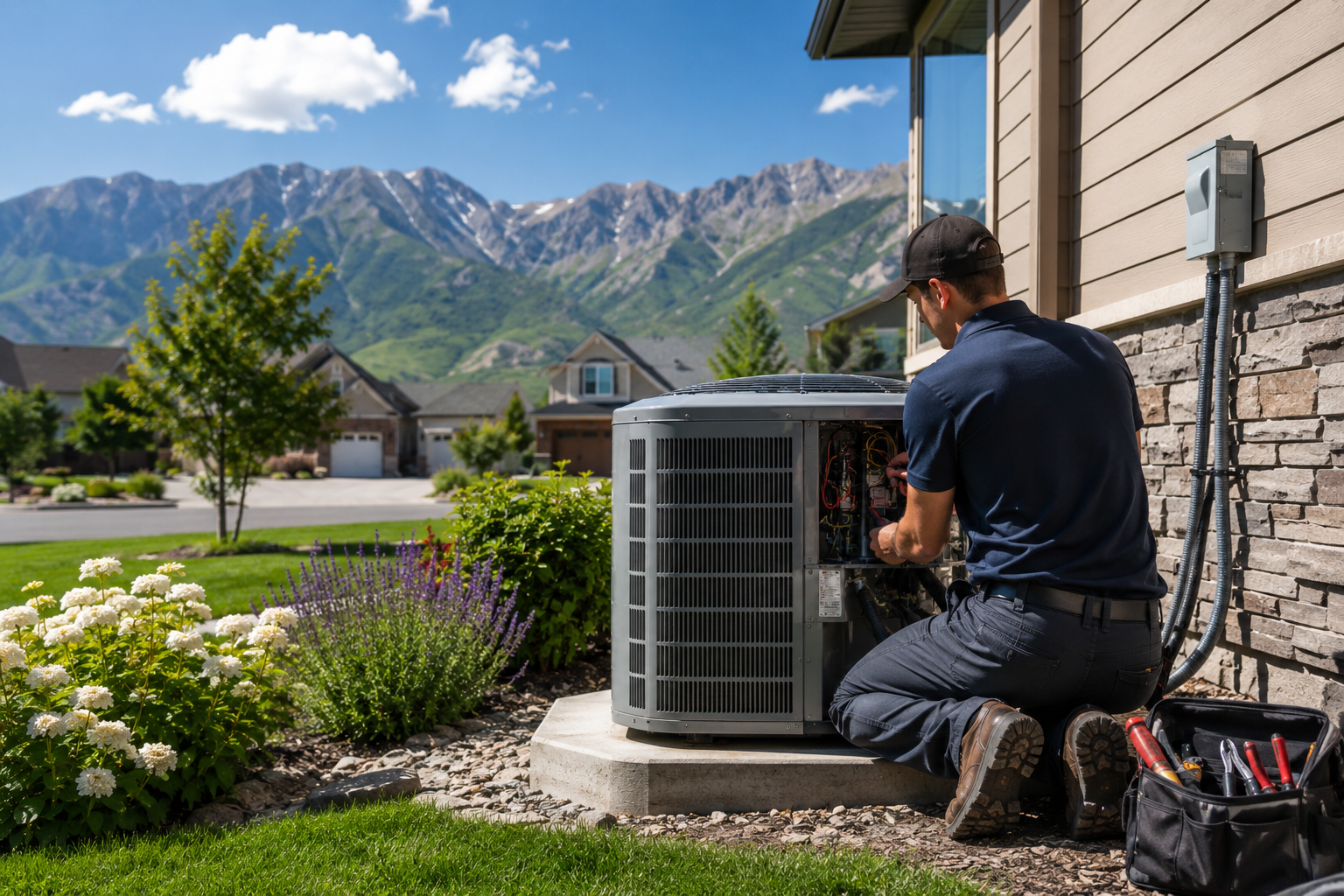

When a Salt Lake City summer pushes past triple digits, an aging air conditioner has nowhere to hide. If your system is limping through July on repairs alone, a new AC installation in Utah is often the more practical and cost effective path forward. This guide walks through what actually goes into the process, from spotting the warning signs to choosing a brand that can handle our high desert climate.
Signs You Need a New AC Installation
Most air conditioners are built to last between twelve and fifteen years, and Utah’s wide temperature swings tend to shorten that window. A few signs point toward replacement rather than another repair:
- Repair costs keep climbing every time a technician visits
- Certain rooms in the house never quite cool down
- Energy bills creep higher each summer without an obvious reason
- The unit still runs on the older R22 refrigerant being phased out
We cover this in more detail in our guide on AC unit lifespan in Utah, which is worth a read if you are on the fence about repair versus replacement.
What a New AC Installation Costs in Utah
Pricing for a new AC installation in Utah generally depends on the size of the home, the tonnage required, and the efficiency tier you choose. Across the Wasatch Front, a full system replacement typically runs between six thousand and fifteen thousand dollars once installation, permitting, and disposal of the old unit are included. Homes with ductwork already in good condition sit toward the lower end of that range, while homes needing duct modifications or a larger tonnage unit for square footage will land higher. Homeowners without existing ductwork sometimes explore our ductless system options instead, which can be a more affordable path for additions or converted spaces. Getting a written estimate that breaks down equipment, labor, and permit fees helps you compare quotes accurately rather than guessing at what is included.
Choosing the Right Brand for Utah’s Climate
Not every AC brand performs the same way once you factor in Utah’s dry heat, high elevation, and cold winters. Trane and Carrier are frequently recommended for their durability in extreme temperature swings, which matters here given how far our thermometers travel between January and July. Lennox and Daikin tend to lead on efficiency ratings, which can translate into real savings on a summer power bill. Goodman and Rheem remain popular for homeowners who want solid performance without paying a premium price tag. Whichever brand you land on, look for a SEER2 rating that meets or exceeds the current federal minimum, since a higher rating means your system uses less electricity to produce the same amount of cooling. The ENERGY STAR cooling program offers a helpful comparison point if you want to check efficiency standards before you commit to a system. You can browse our full AC replacement services for details on the brands and models we install.
The Shift to R454B Refrigerant
If you have shopped for new air conditioning equipment recently, you may have noticed conversations around a new refrigerant standard. The industry has been transitioning from R410A to R454B, a change driven by federal environmental requirements rather than manufacturer preference. Units built after 2025 increasingly use the newer refrigerant, which affects both upfront pricing and long term parts availability. Buying now often means choosing between remaining stock of proven equipment and newer compressor technology, and a knowledgeable installer can walk you through which option fits your budget and timeline.
The New AC Installation Process
A proper installation starts well before a technician shows up with equipment. It begins with a home assessment and a Manual J load calculation, which accounts for your square footage, insulation, window exposure, and ductwork condition to determine the correct tonnage. Oversizing a system leads to short cycling and uneven humidity control, while undersizing leaves your home struggling on the hottest days. Once sizing is confirmed, the installation typically follows these steps:
- Pull the required mechanical permit before any work begins
- Remove the old equipment and disconnect existing lines
- Install the new condenser and coil to spec
- Run a full system test and check refrigerant levels
- Walk you through new thermostat settings and controls
Financing and Rebates
Upgrading to a new system is a significant investment, but it rarely has to be paid all at once. Many Utah HVAC contractors, including our team, offer flexible AC maintenance and financing plans with 0% options for qualified customers to spread the cost over time. It is also worth checking with your local utility provider for rebates tied to high efficiency equipment, since Utah households that upgrade to ENERGY STAR certified systems can sometimes offset part of the installation cost through available federal tax credits and local incentives.
Working With a Licensed Utah Contractor
Before signing any contract, confirm that your installer holds an active Utah DOPL license and pulls the proper mechanical permit for the work, following the acquisition and efficiency standards outlined by the U.S. Department of Energy. A correctly sized, professionally installed mid range system will consistently outperform a premium unit that was installed poorly, so the contractor you choose matters just as much as the brand on the box. Ask for references, confirm insurance coverage, and get every estimate in writing before work begins.
Ready for a New AC Installation
A new AC installation in Utah is not a purchase most homeowners look forward to, but choosing the right brand, size, and contractor makes the process far less stressful. If your current system is struggling to keep up or nearing the end of its expected lifespan, our team at Utah Heating and Cooling can walk you through sizing, financing, and installation from start to finish. See what past customers are saying on our Google Business Profile, then reach out today for a free estimate and see what a properly installed system can do for your home comfort and your summer power bill.
Frequently Asked Questions
How long does a new AC installation take in Utah?
Most residential AC installations are completed in a single day, typically within six to eight hours, assuming no major ductwork changes are needed. Homes requiring duct modifications or electrical upgrades may take an additional day.
What SEER rating is best for Utah homes?
For Utah’s climate, a SEER2 rating between 15 and 18 offers a strong balance between upfront cost and long term energy savings. Homes with higher cooling demand or larger square footage may benefit from an even higher rated system.
Is it cheaper to repair my AC or invest in a new AC installation?
If your system is under ten years old and the repair costs less than a third of a full replacement, repair is often the more economical choice. Once a unit passes twelve to fifteen years or needs a major component like the compressor replaced, full replacement usually saves money over time.
Do I need a permit for a new AC installation in Utah?
Yes, a mechanical permit is required for any full system replacement in Utah. A licensed contractor will pull this permit on your behalf as part of the installation process.
What size AC unit do I need for my home?
The correct size depends on square footage, insulation quality, ceiling height, and window exposure rather than a simple square footage formula. A Manual J load calculation performed by your installer is the most accurate way to determine proper tonnage.
Does a new AC system help with Utah’s dry summer heat?
Yes, a correctly sized, high efficiency system manages both temperature and humidity more effectively than an aging unit, which is especially noticeable during Utah’s driest and hottest stretches in July and August.